

One of the most common starting points in interior design is not knowing where to start. You know you want a change, you have saved images you love, but when you try to describe what you are drawn to, the words do not quite come. Understanding the major interior design styles and what distinguishes them from each other is a genuinely useful first step, not because you need to commit to one, but because it gives you a shared language for your own instincts.
Here is a plain-English guide to six of the most popular styles and what makes each one distinct.
Scandinavian design is built around a deceptively simple philosophy: everything in a space should be both beautiful and useful. The style originated in the Nordic countries in the early twentieth century as a response to the idea that good design should be accessible to everyone, not just the wealthy.
In practice, Scandinavian interiors are characterised by clean lines, a restrained palette of whites, warm neutrals, and muted natural tones, and a deliberate absence of clutter. Natural materials, pale timbers, linen, wool, and stone, feature prominently, as does an emphasis on natural light. The warmth in a Scandinavian interior comes not from colour but from texture and the careful selection of a few meaningful objects.
This style suits people who find visual clutter stressful and feel most at ease in calm, ordered spaces. It pairs well with contemporary architecture and works particularly well in apartments where natural light needs to be maximised.
Mid-century modern remains one of the most enduringly popular interior design styles, and its appeal is not hard to understand. It combines warmth with clean lines, practicality with genuine beauty, and a respect for natural materials with a sense of optimism and fun that few other styles match.
The style emerged in the 1950s and 60s in the United States, shaped by post-war prosperity and a fascination with new materials and technologies. Warm timber tones, organic sculptural forms, and a mix of natural and man-made materials are its defining characteristics. The furniture is designed to be used rather than admired from a distance, and the colour palette balances neutral foundations with deliberate pops of burnt orange, mustard, teal, and forest green.
Mid-century modern suits people who want a home that feels warm and considered without being formal or precious. It pairs exceptionally well with almost every other style, which makes it one of the most flexible starting points for a home that has evolved over time. For a deeper guide to getting the look right, see our mid-century modern styling guide.
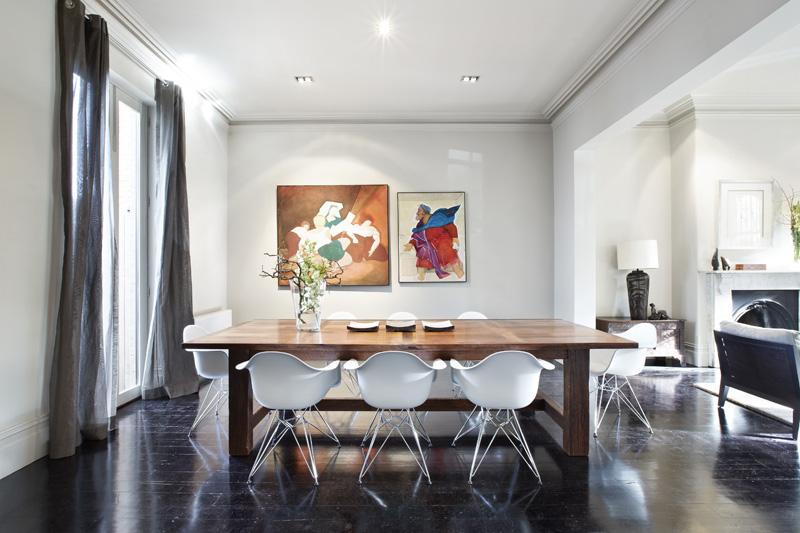
Contemporary design is often confused with minimalism, but the two are not the same. Minimalism is a philosophy of reduction. Contemporary design is simply a reflection of how people live right now, which means it evolves constantly and borrows freely from other styles.
In practice, contemporary interiors tend to favour clean lines, an emphasis on natural light, reflective surfaces, and a palette that leans toward neutral with carefully chosen moments of colour or texture. The overall effect is polished and uncluttered without being stark. Quality of finish matters greatly in a contemporary interior because there is nowhere for poor workmanship to hide.
This style suits people who want their home to feel current and considered without being tied to a specific historical reference. It rewards investment in quality materials and works particularly well in new builds and renovated spaces with strong architectural bones.

Maximalism is the confident, joyful counterpoint to the minimalist aesthetic that has dominated interior design for the past two decades. Where minimalism edits down, maximalism layers up. Pattern, colour, texture, and personal objects are all celebrated rather than concealed.
A maximalist interior is not simply a cluttered one. The distinction is intention. A well-executed maximalist room has a clear logic to its abundance: a considered colour palette that ties competing patterns together, a dominant style that gives the eclecticism its backbone, and enough negative space to prevent the room from feeling overwhelming. Wallpaper is often the starting point for a maximalist interior, providing a strong pattern foundation that everything else can respond to.
This style suits people who feel that neutral, minimal interiors leave them cold and who find personality and layering energising rather than distracting. It rewards confidence and is genuinely one of the most expressive styles to work with.

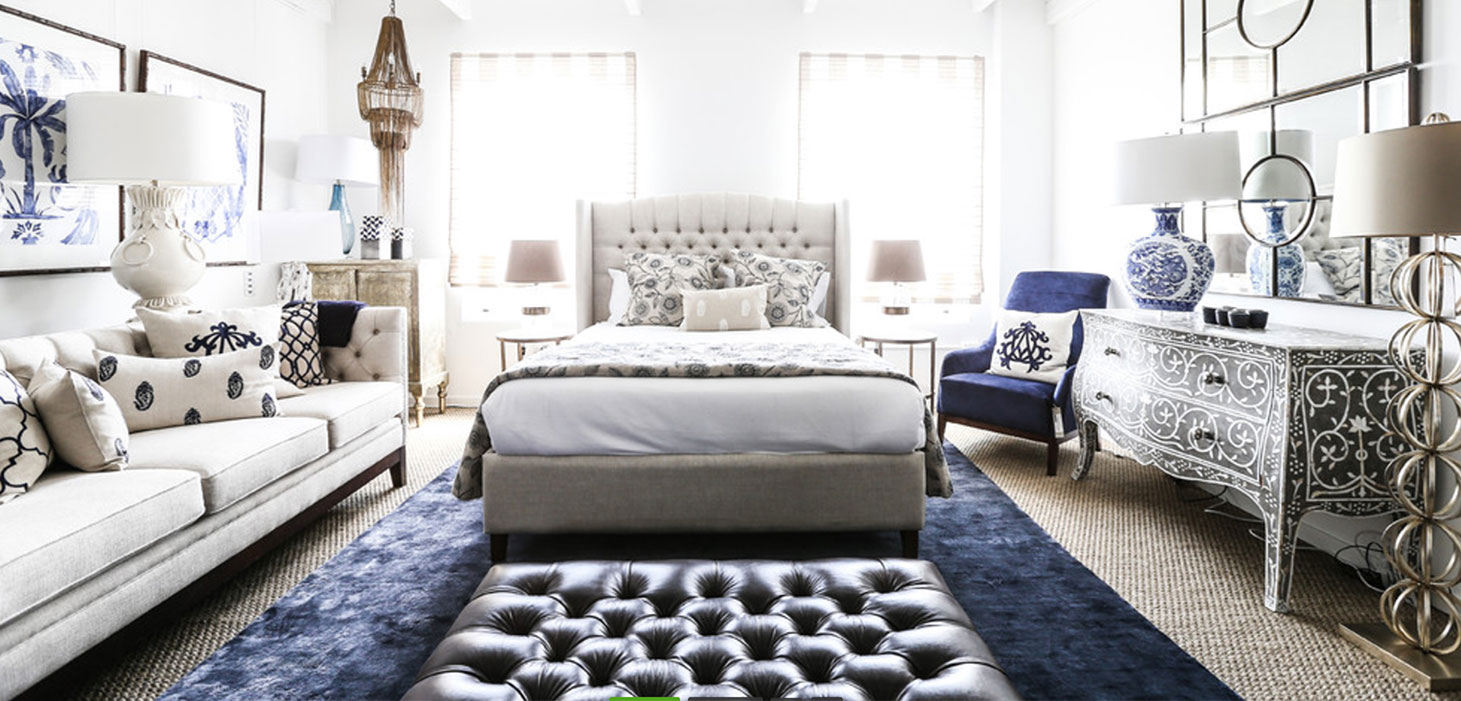
The Hamptons style takes its name from the coastal retreat community outside New York City and has become one of the most widely loved aesthetics in Australian interior design. It translates the relaxed, sun-bleached quality of East Coast American beach houses into a palette and material language that suits the Australian coastal lifestyle particularly well.
White and off-white walls, natural timber floors, woven textures, linen upholstery, and a palette drawn from the ocean and the shoreline are the foundations of the style. Navy blue, soft aqua, sandy neutrals, and crisp white work together to create interiors that feel breezy, informal, and quietly luxurious. The style avoids anything that feels heavy or overly formal.
Hamptons suits people who want their home to feel like a permanent holiday without sacrificing comfort or quality. It works beautifully in both coastal and inner-city homes and pairs naturally with outdoor entertaining spaces. For a more detailed guide to getting the Hamptons look right in an Australian home, our dedicated Hamptons styling article goes into the specific elements in detail.
Art Deco emerged in the 1920s and 30s as a celebration of modernity, glamour, and craftsmanship. It drew from a wide range of influences, ancient Egyptian motifs, the geometry of the machine age, and the bold optimism of post-war prosperity, and synthesised them into a style that remains one of the most visually distinctive in the history of interior design.
Jewel tones, brass and gold finishes, geometric patterns, mirrored surfaces, and rich materials like velvet, lacquer, and marble are all characteristic of the style. The emphasis is on symmetry, bold contrast, and a sense of occasion. Art Deco interiors are designed to impress, but the best examples balance grandeur with livability.
You do not need jewel-toned walls to introduce Art Deco into your home. A brass pendant light, a geometric tiled floor, a velvet sofa in deep emerald or sapphire, or a mirrored console table are all ways to introduce the spirit of the style without committing to a full period interior. GlobeWest carries a range of furniture and mirrors with strong Art Deco references that work well in contemporary Australian homes.

The most interesting and personal interiors are rarely pure expressions of a single style. A mid-century modern sofa alongside a French provincial armoire, Scandinavian simplicity underpinned by maximalist artwork, or a Hamptons palette with Art Deco light fittings all create interiors that feel collected and genuinely lived in rather than straight from a showroom.
The value of understanding these styles is not to pick one and follow it rigidly, but to develop the vocabulary to describe what you are drawn to and to make decisions with more confidence. Once you know why you love what you love, the choices become easier.
If you would like help identifying your style and translating it into your home, get in touch. It is one of the most enjoyable conversations to have at the start of a project.


