

The most compelling apartments are rarely the ones that adhere strictly to a single style or period. They are the ones that feel genuinely collected, where a Victorian mask sits beside a contemporary sofa, where a mid-century daybed occupies a Parisian room with ornate mouldings, and where the accumulated evidence of a life well-lived gives the space a quality of authenticity that no amount of professionally sourced, period-correct furniture can replicate.
This kind of eclectic design is often misunderstood as an absence of discipline. In fact it requires more discipline than a single-style approach, because the connections that hold the disparate elements together are invisible rather than obvious. Here is how to create an apartment that draws from multiple eras, cultures, and aesthetics while remaining coherent, warm, and entirely personal.
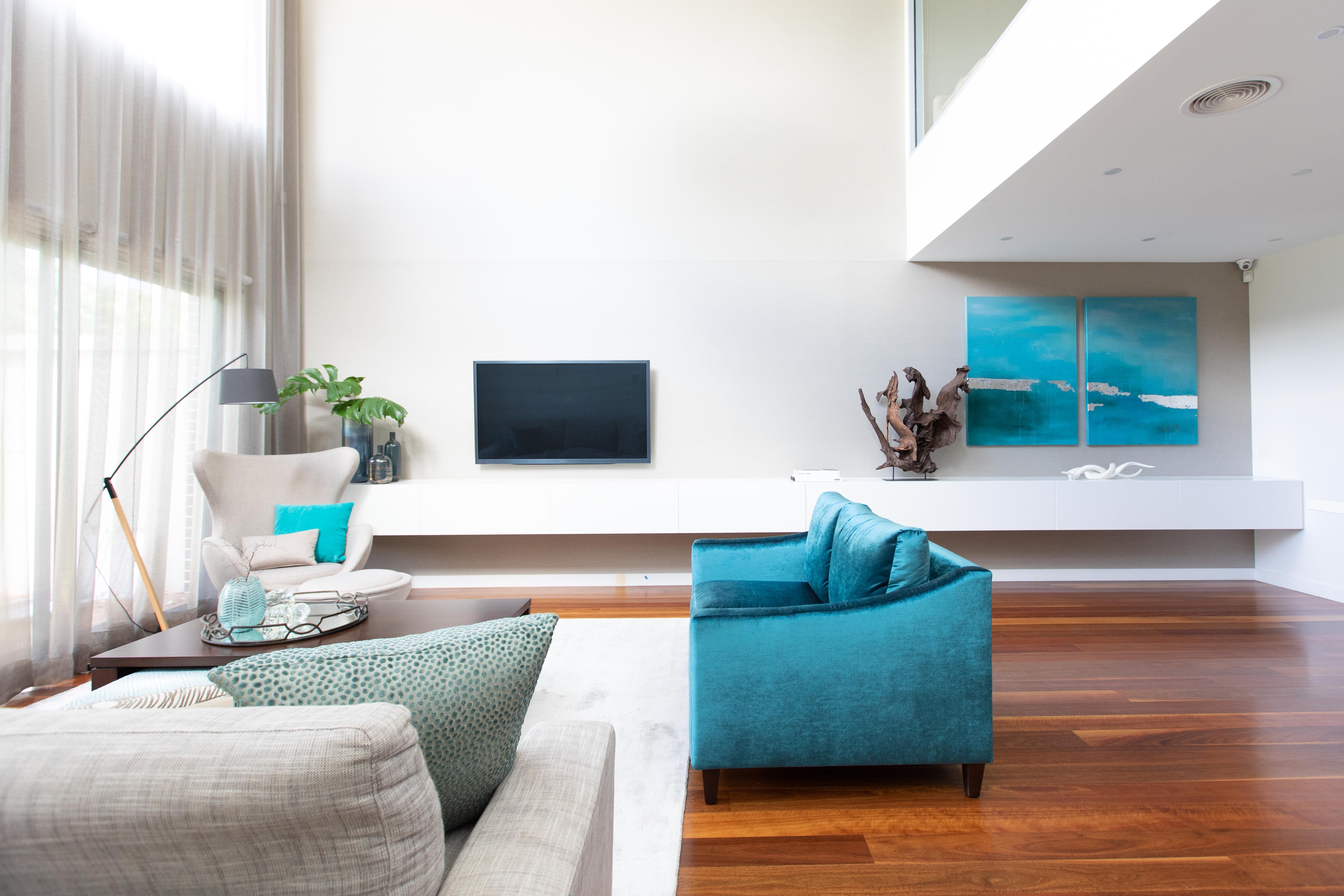
The most successful eclectic apartments begin with a clear understanding of what the building offers architecturally and what that architecture is asking for in terms of scale, proportion, and material. A Parisian apartment with grand proportioned rooms, huge windows, and intricate cornices and mouldings operates at a different scale from a compact New York apartment with lower ceilings and more intimate room sizes. The furniture, the lighting, and the decorative choices that work in one context can feel completely wrong in the other.
In a space with genuine architectural character, the first design decision is to honour that character rather than override it. Large-scale furniture that suits the proportions of a grand room. Window treatments that acknowledge the scale and quality of the original windows rather than minimising them. Lighting that responds to the ceiling height rather than defaulting to a fitting better suited to a lower space.
This does not mean the interior needs to be period-correct or slavishly historical. A mid-century daybed in a Parisian room with classical mouldings creates a productive tension that makes both elements more interesting. The contrast is the point. But it requires that both elements are strong enough individually to sustain the comparison.
Retro daybeds, occasional chairs, and velvet sofas in jewel tones, deep emerald, rich sapphire, warm amber, dusty rose, and ruby, are among the most versatile and characterful pieces available in eclectic apartment design. They introduce colour and personality at a human scale without requiring a commitment to a full painted wall or a strong colour throughout the room.
A single jewel-toned daybed in an otherwise neutral room creates an immediate focal point and a specific mood that a neutral piece never achieves. It signals that someone made a deliberate and confident colour choice, which in itself gives the room a sense of design intention.
The key to using jewel tones successfully in an eclectic interior is ensuring they appear in more than one place in the space. A deep emerald daybed that is completely isolated in a neutral room can feel arbitrary. The same emerald daybed in a room where the same tone reappears in a cushion, a piece of artwork, or an accessory creates the colour thread that makes it feel considered rather than accidental.
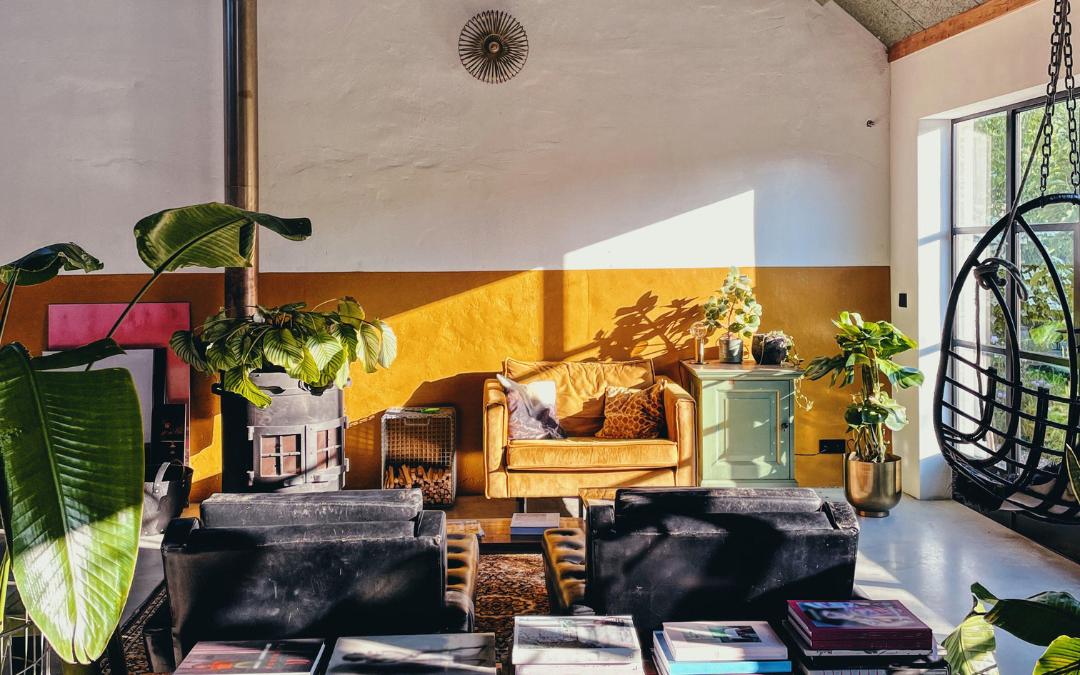
One of the most interesting principles in eclectic apartment design is the deliberate shift in mood between rooms. A bold, characterful living room with strong colours and an eclectic collection of objects gives way to a more subtle, couture bedroom where the palette softens, the materials become more refined, and the overall atmosphere is more intimate and personal.
This shift in mood between rooms is not inconsistency. It is a sophisticated understanding of how different spaces within a home serve different emotional needs. The living room is a social space where bold choices create conversation and energy. The bedroom is a private retreat where subtlety and sensory comfort matter more than visual impact.
The practical application is to allow each room to have its own specific character while maintaining a consistent thread that connects them. That thread might be a material family, a recurring colour in a different application, or a consistent quality of craftsmanship across pieces chosen for different rooms. The connection need not be obvious. It needs only to be felt.
A family apartment where the children's spaces have been designed with genuine care and quality signals something specific about how the household values its youngest members. A playroom with a properly designed sectional sofa and a custom rug is a different kind of space from one with a foam mat and plastic toy storage. The children feel the difference even if they cannot articulate it, and it contributes to a sense of the home as a genuinely considered environment rather than a space divided between adult territory and child territory.
Quality pendant lighting, a well-chosen rug, and properly upholstered furniture in a children's playroom treat the space with the same seriousness as the living room or master bedroom. Children's bedroom design can include genuinely personal touches, photographs taken by family members framed and hung above the beds, artwork made by the children themselves, or objects that connect to the family's specific history, which give the room a warmth and authenticity that generic children's decor cannot provide.
A lacquered bar tucked into an alcove, a corridor end, or a compact dedicated space is one of the highest-impact, smallest-footprint design investments available in an apartment. Even a space of one or two square metres, lacquered in a strong colour, fitted with proper shelving for bottles and glassware, and styled with a small piece of artwork or a plant, delivers a sense of luxury and sophistication disproportionate to its size.
The lacquer is the key element. A high-gloss surface in a deep, saturated colour, racing green, navy, burgundy, or black, creates a jewel-box quality that makes the space feel intentional and special. The reflective surface amplifies the available light and makes the space feel larger than it is. Combined with warm downlighting directed at the bottles and glassware, a lacquered bar becomes one of the most visually compelling moments in the apartment.
This principle scales well to residential contexts of any size. A single deep-coloured, lacquered cabinet in a living room can create the same effect at a fraction of the space requirement of a dedicated bar alcove. The impact comes from the colour and the finish, not from the size.
The eclectic apartment that feels most genuinely interesting is almost always the one where objects from different centuries and different cultural traditions coexist with contemporary pieces in a way that feels organic rather than staged. A 19th century African mask above a contemporary sofa. A vintage Italian bench at the foot of a modern bed. A hand-crafted cocktail table made by an individual maker alongside mass-produced shelving units.
These combinations work when each object is strong enough individually to hold its own in the composition, and when a consistent quality thread runs through the selection regardless of age or origin. A 19th century mask and a contemporary velvet sofa can coexist beautifully because both have a quality and presence that allows them to sustain comparison. A poorly made reproduction and a cheap contemporary piece cannot, regardless of how different their periods.
When sourcing antiques and objects for an eclectic interior, prioritise quality and authenticity over period correctness. A genuine piece from any era will always sit more comfortably in an eclectic interior than a reproduction of uncertain quality, because the eclectic apartment derives its character from the accumulation of real things with real histories.
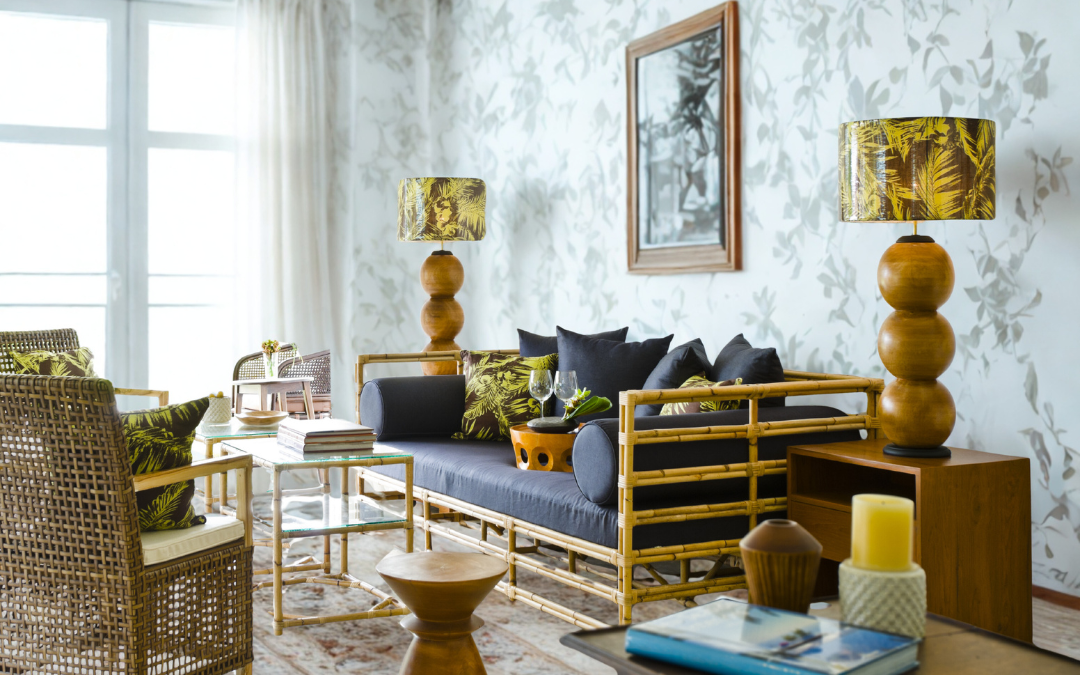
In an eclectic apartment where the living spaces are characterised by bold objects and collected furniture, the master bedroom is an opportunity to create a different kind of bold through the use of an opulent wallpaper that makes the room feel entirely its own world.
A wallpaper with a rich pattern, whether botanical, geometric, pictorial, or abstract, applied to all four walls of a bedroom creates a total environment that is completely distinct from the rooms around it. The furniture within that environment can be relatively simple and the palette can respond to the dominant tones of the wallpaper rather than introducing additional colour.
The result is a bedroom with a specific character and atmosphere that is impossible to achieve through paint and furniture alone. The wallpaper article published separately on this site covers the full range of wallpaper options available in contemporary Australian design, including the specific technique of using wallpaper to create a total room environment. Dulux can advise on paint colours that complement a chosen wallpaper, which is worth confirming before committing to either.
The eclectic apartment that truly works is not the one where everything matches or where every element has been sourced from the same design era. It is the one where someone made a series of genuine, personal decisions about what belongs in their home and why, and then followed those decisions with the consistency and care that turns a collection of objects into a coherent domestic world.
Jewel tones and antique masks. Lacquered bars and children's playrooms. Parisian mouldings and mid-century daybeds. These combinations work because the people who made them understood what connects them and gave that connection space to be felt.
If you would like help creating an apartment with this kind of personal coherence, get in touch. It is one of the most rewarding kinds of brief we work with.


