

Not everyone who works from home has a dedicated study to retreat to. For most people, the home office is a corner of a bedroom, a section of the living room, or a nook carved out of whatever space is available. Making that work, both functionally and visually, takes a different approach than simply furnishing a spare room.
The challenge is twofold: the workspace needs to support focused, productive work during the day, and it needs to sit comfortably within a room that serves a completely different purpose the rest of the time. Here is how to get both right.
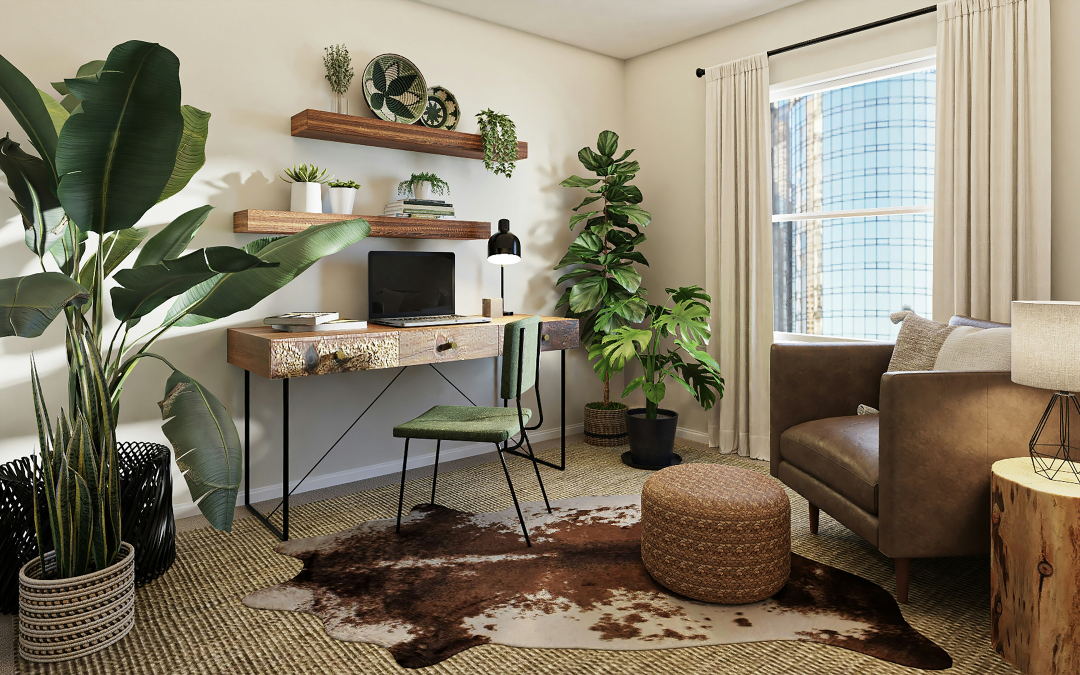
The location of your workspace within a shared room matters more than any piece of furniture you choose. The goal is to find a position that offers as much visual and psychological separation from the rest of the room as possible, even in a small space.
A bay window recess, an alcove, the end of a hallway, or a corner that can be defined with a rug or a bookshelf are all worth considering before you settle for wherever the desk happened to fit. Facing a wall rather than into the room helps maintain focus by removing visual distractions from your sightline. Positioning away from the television and, in a bedroom, away from the bed, creates the mental separation between work and rest that is especially important when both happen in the same space.
If your apartment or home has a deep built-in wardrobe that is not being used efficiently, it is worth considering whether it could be converted into a dedicated office nook. A desk surface installed at the right height, a shelf or two above it, and good internal lighting transforms an underused storage space into a proper workspace that closes away completely when the working day is done.
One of the most effective solutions for a home office in a shared living space is the concealed desk. A desk built into a deep cupboard with bi-fold or sliding doors gives you a fully functional workspace that disappears entirely when it is not in use. When the doors are open, you are at work. When they close, the office ceases to exist as far as the rest of the room is concerned.
A flip-down wall-mounted desk achieves a similar result in an even smaller footprint and is particularly useful in apartments where floor space is genuinely limited. Paired with a wall-mounted shelf above for storage and a compact ergonomic chair from Buro Seating that can be tucked away when not needed, this setup can be remarkably functional within a very modest space allocation.

When a desk lives permanently in a bedroom or living area, the way it is styled matters as much as how it functions. A workspace that looks out of place in its surroundings creates a constant visual reminder that the two worlds are colliding, which makes it harder to mentally switch off from work at the end of the day.
The simplest way to integrate a desk into a living space is to treat it as a piece of furniture rather than a piece of equipment. Choose a desk in a finish and style that complements the rest of the room rather than contrasting with it. A timber desk in a warm tone sits naturally in most living rooms and bedrooms. A sleek lacquered surface suits a more contemporary interior. GlobeWest carries a range of desk and console options in finishes suited to residential rather than commercial settings, which is exactly what is needed when the office shares a room with the rest of your life.
Keep the desk surface as clear as possible during non-working hours. A single plant, a lamp, and one or two considered objects on the desk make it look intentional rather than functional when work is not happening.
In an open plan space, defining the work zone visually helps your brain register it as a distinct area rather than just another part of the room. A rug under the desk and chair is one of the simplest ways to do this. It anchors the workspace within the broader room and creates a subtle boundary that does not require any structural change.
A bookshelf positioned to one side of the desk acts as both storage and a soft partition. A pendant light or a wall-mounted sconce directly above the desk draws the eye to the zone and creates a lighting layer that is distinct from the ambient lighting in the rest of the room. These details cost relatively little but do a significant amount of work in making a shared space feel purposefully designed rather than improvised.
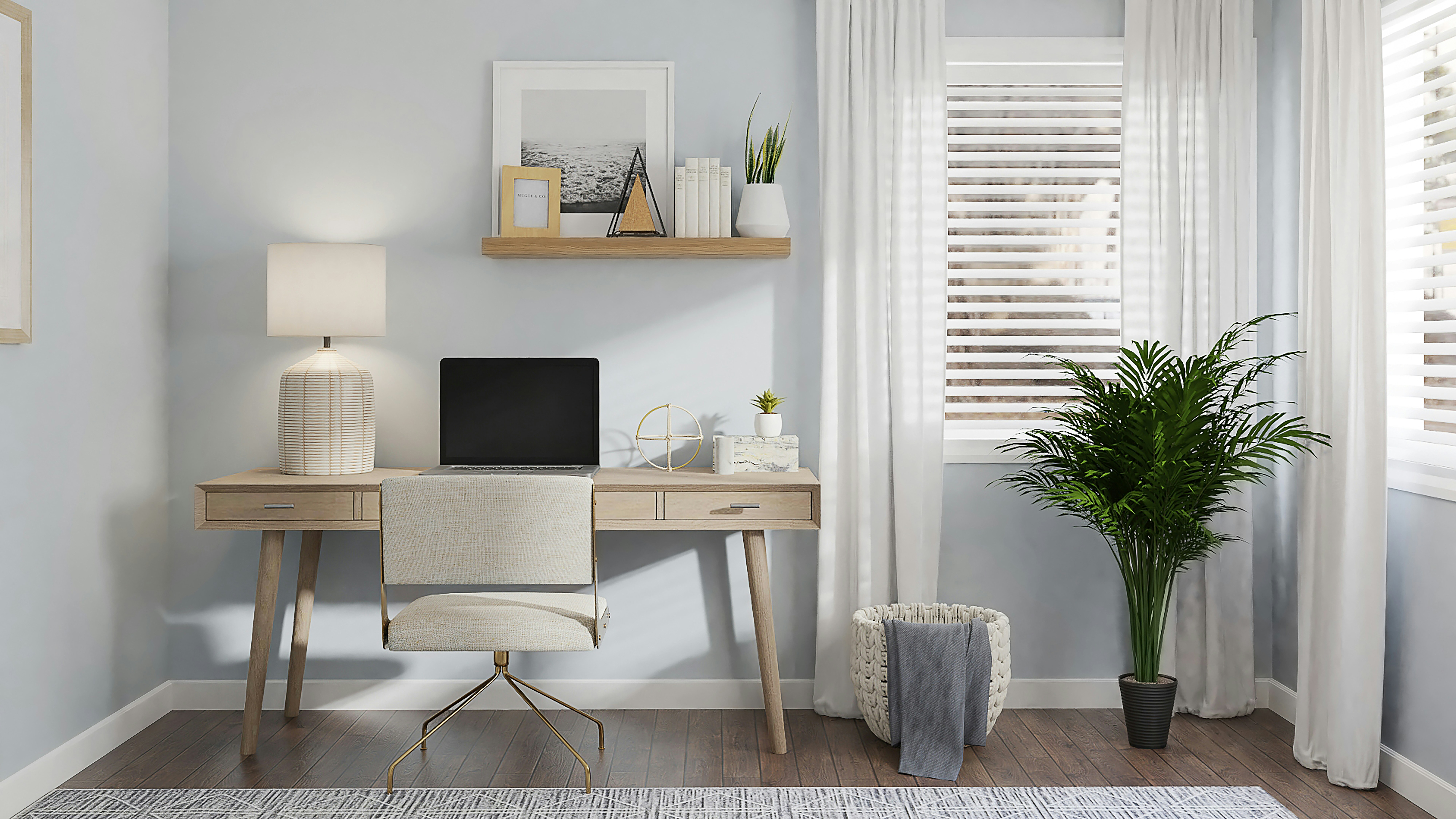
Storage in a home office that shares a room with another function needs to be edited ruthlessly. You cannot afford the visual weight of a full filing cabinet or open shelving stacked with papers and equipment in a space that doubles as a living room or bedroom.
The goal is to keep everything work-related contained within the footprint of the desk area. Floating shelves directly above the desk handle reference books and storage boxes without encroaching on the rest of the room. A desk with built-in drawers keeps stationery and files out of sight. A small set of Bunnings modular storage boxes in a consistent colour or finish looks considered on a shelf rather than cluttered.
Cable management is particularly important in a shared space. Loose cables on a desk in the middle of a living room are a constant visual distraction. Bundling them, routing them behind furniture, or choosing wireless peripherals where possible keeps the workspace looking clean and intentional from across the room.
One of the biggest challenges of working in a shared space is the absence of a physical door to close at the end of the day. Without that clear boundary, work has a tendency to creep into the rest of your time at home.
Building a simple end-of-day ritual around the workspace helps compensate for this. Clearing the desk surface, closing the laptop, and if you have one, closing the cupboard doors or folding down the desk signals clearly to your brain that the working day is finished. A plant on the desk that you water as part of this ritual, or a candle you light only outside of working hours, are small sensory anchors that reinforce the transition between the two modes.
The physical act of putting work away, even in a small space, makes more difference to your ability to switch off than most people expect.
A home office in a shared space is a design challenge worth taking seriously. When it is done well, the workspace supports your productivity during the day and recedes gracefully into the background when the day is over. When it is done poorly, it creates a constant tension between the two functions of the room that affects both.
By choosing the right location, containing the workspace visually, styling the desk to suit its surroundings, and building clear boundaries between work and home, you can create a setup that genuinely serves both purposes.
If you would like help designing a home office within a shared space, get in touch. It is the kind of practical design problem we enjoy solving.


