

The hallway is one of the most overlooked spaces in the home. It gets painted last, furnished with whatever is left over, and treated as a corridor rather than a room. But it is the first space anyone sees when they walk through your door, and the last space you pass through every time you leave. Getting it right matters more than most people realise.
The world's most memorable entrance spaces, from hotel lobbies to beautifully designed private homes, share a consistent set of principles. They create a clear focal point, they use lighting to establish atmosphere, they balance function with beauty, and they make a visitor feel something specific the moment they arrive. All of those principles apply equally to a generous foyer or a narrow apartment hallway.
Here is how to apply them in your own home.

Every well-designed entrance needs one element that draws the eye immediately on arrival. Without it, the space feels unresolved, like a room that has not quite decided what it is. With it, even the most modest hallway feels authored and intentional.
The most effective focal points in a hallway are a statement mirror, a significant piece of artwork, a console table styled with considered objects, or a pendant light hung at a height that commands attention. The choice depends on the proportions of your hallway and which element suits the style of your home. What matters is that there is one clear visual destination when you open the door, rather than a wall of coat hooks and a pile of shoes.
In a narrow hallway where floor space is limited, a large mirror is often the single most effective focal point available. It draws the eye, reflects light, and creates the impression of depth that makes the space feel larger than it is. Position it so it reflects something worth seeing, a window, a plant, or a piece of artwork, rather than the back of a door.
Hallway lighting is almost universally underconsidered. The default is a single overhead fitting that provides adequate visibility and nothing else. The result is a space that feels functional rather than welcoming, which sets entirely the wrong tone for the rest of the home.
Layered lighting transforms an entrance. A pendant or chandelier provides the ambient base, but the real warmth comes from lower, softer sources. A lamp on a console table creates a pool of warm light at eye level that is immediately more inviting than overhead illumination alone. Wall sconces on either side of a mirror or artwork add a symmetry and formality that suits a hallway particularly well.
If your hallway has limited natural light, warm-toned bulbs throughout are non-negotiable. Cool white light in an entrance makes a home feel institutional rather than welcoming. Beacon Lighting carries a strong range of hallway-appropriate pendants, wall sconces, and console lamps in finishes suited to a range of interior styles.
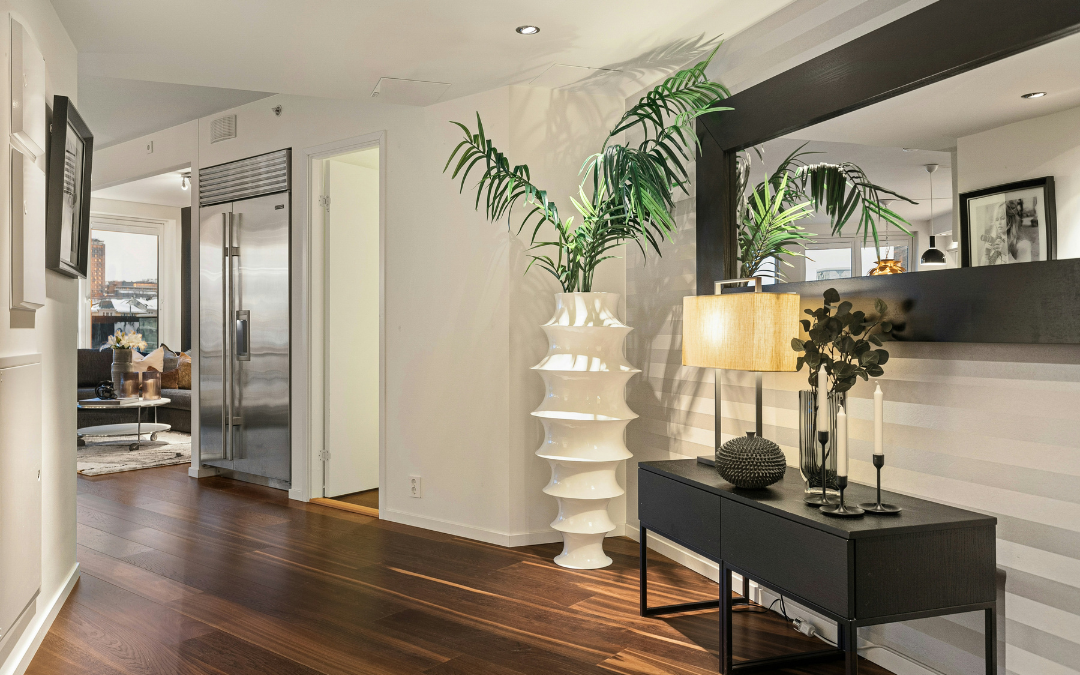
A console table is the most versatile piece of furniture available for a hallway. It provides a surface for keys, mail, and everyday objects that would otherwise end up on the floor. It creates an anchor point for a lamp, a vase, or a piece of art. And it gives the hallway the sense of being a considered room rather than a transitional space.
Choose a console proportional to your hallway width. In a narrow space, a slim console of 25 to 30 centimetres in depth is sufficient and will not impede movement. In a more generous entrance, a deeper console with storage drawers underneath handles everyday items out of sight while maintaining a clean surface above.
Style the surface simply. A lamp, a small vase with a few stems, a stack of books, and one or two considered objects are all a console needs. Resist the urge to fill every inch. The restraint is what makes it look styled rather than cluttered. GlobeWest carries a range of console tables in timber and metal finishes suited to both contemporary and more traditional hallway styles.
The hallway is where the practical realities of daily life collect: shoes, bags, coats, umbrellas, and the general detritus of coming and going. If storage is not planned for deliberately, these items will colonise every surface and undermine even a beautifully styled entrance.
Built-in storage is the most space-efficient solution in a narrow hallway. A row of hooks at a consistent height handles coats and bags without requiring floor space. A bench with storage underneath, or a shallow cupboard built into an alcove, handles shoes and seasonal items out of sight. If built-ins are not possible, a compact storage bench with a hinged lid and a wall-mounted hook rail achieves a similar result without structural work.
The goal is to give every everyday item a designated home so the hallway surface and floor remain clear. A hallway that functions well looks considerably better than one that has been styled beautifully but cannot absorb the reality of daily use.
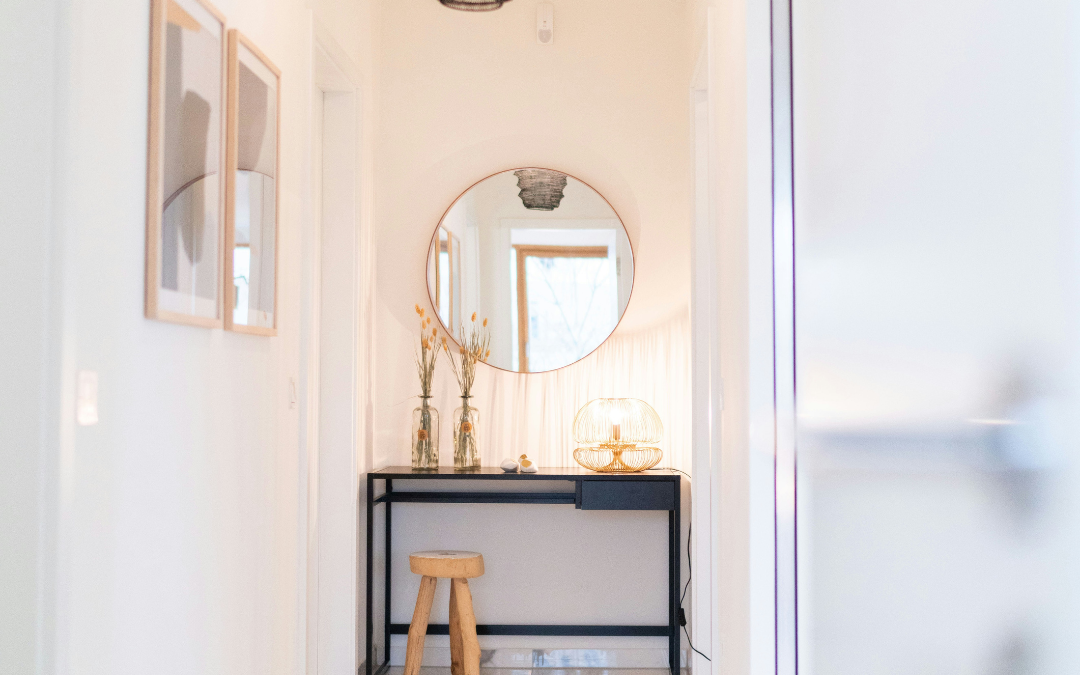
Mirrors earn their place in a hallway more decisively than almost anywhere else in the home. They serve three simultaneous purposes: they reflect light to make the space feel brighter, they create visual depth to make it feel larger, and they provide the practical function of a last check before leaving the house.
A large single mirror is almost always more effective than several smaller ones. In a hallway, a mirror that runs from roughly waist height to above head height creates the most generous visual effect. Lean it against the wall for a relaxed, contemporary feel, or mount it to maximise the light-reflecting effect.
The frame matters as much as the mirror itself. An ornate carved frame suits a period home. A simple timber or black metal frame suits a contemporary interior. A frameless mirror suits a minimalist aesthetic. GlobeWest carries a range of statement mirrors in finishes suited to hallway use, from slim arched forms to wider rectangular options that suit a console pairing.
The hallway floor takes more traffic than any other surface in the home and needs to perform accordingly. But it also sets the tone for the entire interior the moment someone crosses the threshold, which means the material choice carries disproportionate design weight for what is often a small area.
Timber and stone are both excellent hallway floor choices for their durability and their visual warmth. If your hallway connects to a living area with the same flooring, running the material continuously creates a seamless flow that makes both spaces feel larger. If you want to define the entrance as its own zone, a change in material or the addition of a rug creates a deliberate boundary without a physical barrier.
A rug in the hallway adds warmth, reduces noise, and introduces colour or pattern in a space where a painted wall might feel too committed. Choose one that is generous enough to feel intentional rather than a small mat that floats in the middle of the floor. Armadillo produces natural fibre and handwoven rugs in runner formats well suited to hallway proportions.
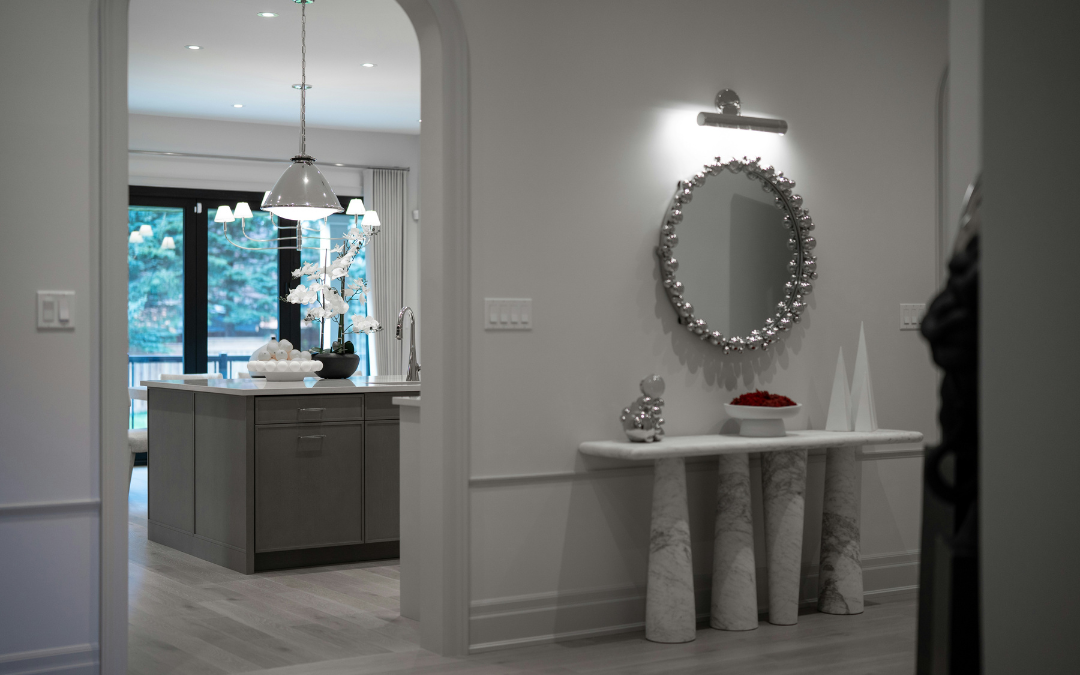
Great entrance spaces engage more than just the eye. A considered scent the moment someone walks in creates an immediate and powerful impression that most people feel before they can articulate it. A reed diffuser on the console table, a candle burning in the evening, or a bunch of fragrant flowers in a simple vase all contribute to an entrance that feels genuinely welcoming rather than merely well-styled.
This is one of the smallest and least expensive investments available in hallway design, and one of the most memorable. The scent of a home is often what guests remember and describe long after the visual details have faded.
Not every hallway has room for a console table, a pendant light, a mirror, and a storage bench. In a compact apartment entrance, the priority order is: one focal point, one functional storage solution, and one light source warmer than an overhead fitting. Those three elements are the minimum for an entrance that feels considered rather than neglected.
In a more generous foyer, the same principles apply at a larger scale. A console and lamp, a significant mirror or artwork, a statement pendant, a storage solution out of sight, and a rug that defines the zone. The principles are identical. The execution scales to the space available.
The hallway deserves the same level of design attention as any other room in the home, because it is the room that shapes every visitor's first impression and colours how they experience everything that follows. A well-designed entrance does not need to be grand or expensive. It needs to be intentional.
If you would like help designing or refreshing your hallway, get in touch. It is one of those spaces where a small amount of considered effort produces a disproportionately large return.


