

A great restaurant interior does something that most rooms never attempt. It creates a complete atmosphere, a world within a world, that makes the experience of being in it inseparable from the experience of eating and drinking there. The most memorable restaurant meals are almost never remembered for the food alone. They are remembered for the feeling of the room, the quality of the light, the material of the surfaces, and the sense that someone designed the space with genuine care for the people who would occupy it.
The principles behind the most compelling restaurant interiors are not exclusive to hospitality design. They are transferable to any space that aims to create atmosphere, warmth, and a specific emotional experience. Here is what the best restaurant interiors get right.
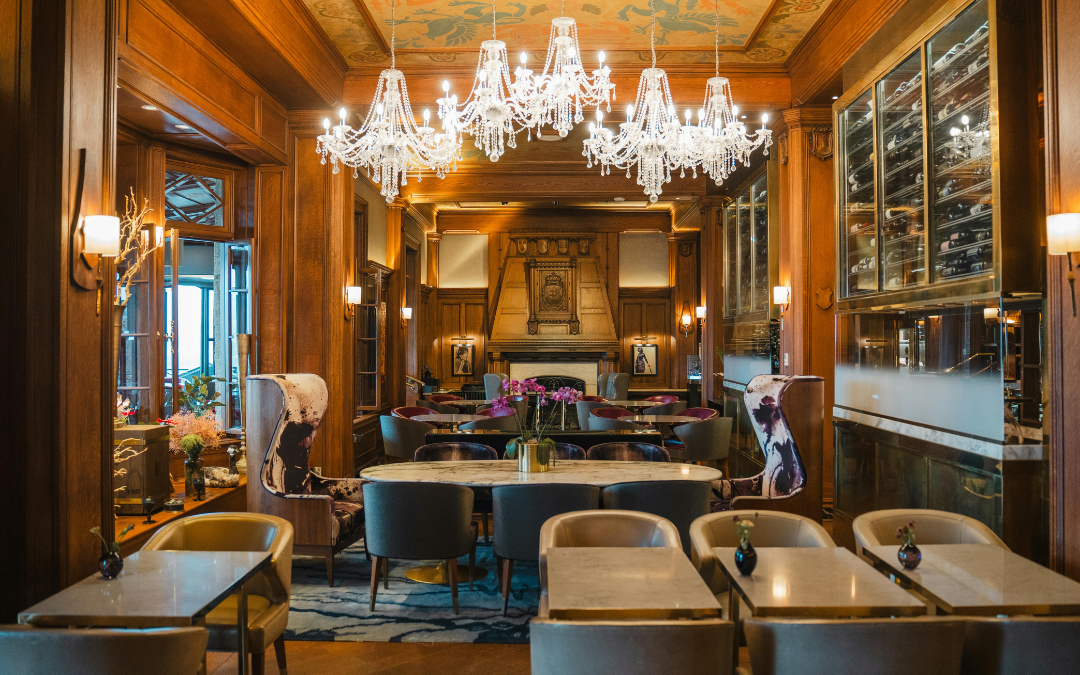
The most memorable restaurant interiors are frequently those housed in buildings designed for entirely different purposes. A former military chapel. A 19th century palace. A converted warehouse. A heritage arcade. These buildings bring an architectural character, a quality of ceiling height, material texture, and spatial drama, that a purpose-built restaurant shell rarely achieves.
The design challenge in adaptive reuse is finding the point of productive contrast between the original architecture and the new use. Keeping the original chapel's soaring ceiling height and patterned tile floor while introducing contemporary lighting and furniture creates a dialogue between past and present that makes the space genuinely interesting. Retaining the carved wooden screens and gold-detailed walls of a palace setting while updating the dining furniture and lighting creates the same productive tension at a smaller scale.
In residential design, this principle applies to every property with existing architectural character. The original fireplace, the period cornices, the exposed brick, or the heritage timber floors are all worth preserving and working with rather than replacing, because they provide exactly this quality of character that new materials cannot manufacture.
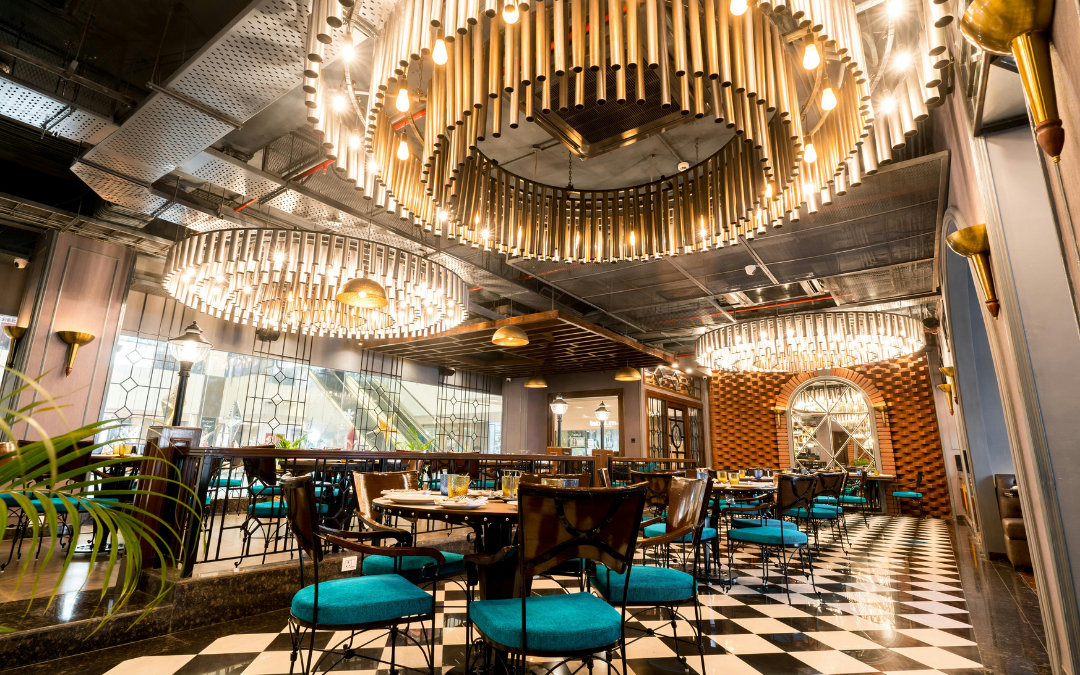
A statement chandelier in a restaurant does more than provide light. It defines the spatial experience of the room, creates a visual focal point that the eye returns to throughout the meal, and signals immediately that the interior has been designed with genuine ambition.
In a high-ceilinged space, a chandelier hung at an unexpectedly low height creates a sense of enclosure and intimacy within a generous volume. In a lower-ceilinged space, a chandelier of unusual scale or form creates the drama that the architecture alone cannot provide. The fitting does not need to be conventional in form. A sculptural, custom-made chandelier that spans a significant portion of the dining room becomes as much a piece of installation art as a light fitting.
The principle translates directly into residential dining rooms. A statement pendant or chandelier above a dining table is the single most impactful lighting investment available in that room. It creates the intimate pool of light that makes dining feel like an occasion, and it provides the visual anchor around which the rest of the room organises itself. Beacon Lighting carries a range of statement dining room pendants and chandeliers suited to Australian residential interiors.
The restaurant interiors that make the strongest visual impression are almost always the ones that commit fully to a single colour direction rather than hedging between multiple palettes. A room that is entirely pink from floor to ceiling, furnished in pink, lit to enhance the pink, and decorated with artwork that responds to the pink, makes a statement that a room with pink accents in an otherwise neutral space never could.
This kind of total colour commitment requires courage and genuine design thinking. The colour must be chosen for how it feels to be surrounded by it over the course of a meal, how it affects skin tones in the available light, how it changes from day to evening, and how it relates to the specific cultural and aesthetic identity of the space. A monochromatic interior is not simply one colour applied everywhere. It is a sophisticated understanding of how a single colour can carry an entire spatial experience.
In residential design, a fully coloured room is most successful in a contained space where the intensity is welcome rather than overwhelming. A library or study in a deep forest green. A dining room in a warm, saturated terracotta. A bathroom tiled floor to ceiling in one material and tone. These spaces become destinations within the home, rooms with a specific character that makes them feel genuinely designed.
The restaurant interiors that people remember and return to are almost always the ones where artwork has been integrated into the design in a way that gives the space a specific cultural identity and a specific point of view. Artwork commissioned specifically for the space, whether it covers the walls entirely, hangs as a single significant piece, or appears in the form of hand-painted wallpaper or decorative tile, communicates that the people who designed the space had something specific to say.
The principle is not about the quality or the value of the artwork. It is about the specificity of the choice. Artwork chosen because it fits the colour scheme is generic. Artwork chosen because it reflects something specific about the identity of the space, its cultural references, its history, its humour, its values, gives the room a personality that purely decorative choices cannot provide.
In a residential context, this principle applies to the role of art in any room. Art chosen because it fits the palette is decoration. Art chosen because it means something specific to the people who live with it is the element that makes a home feel genuinely personal. The Print Emporium offers a range of art prints that can introduce a specific cultural or aesthetic identity into a room at an accessible investment.
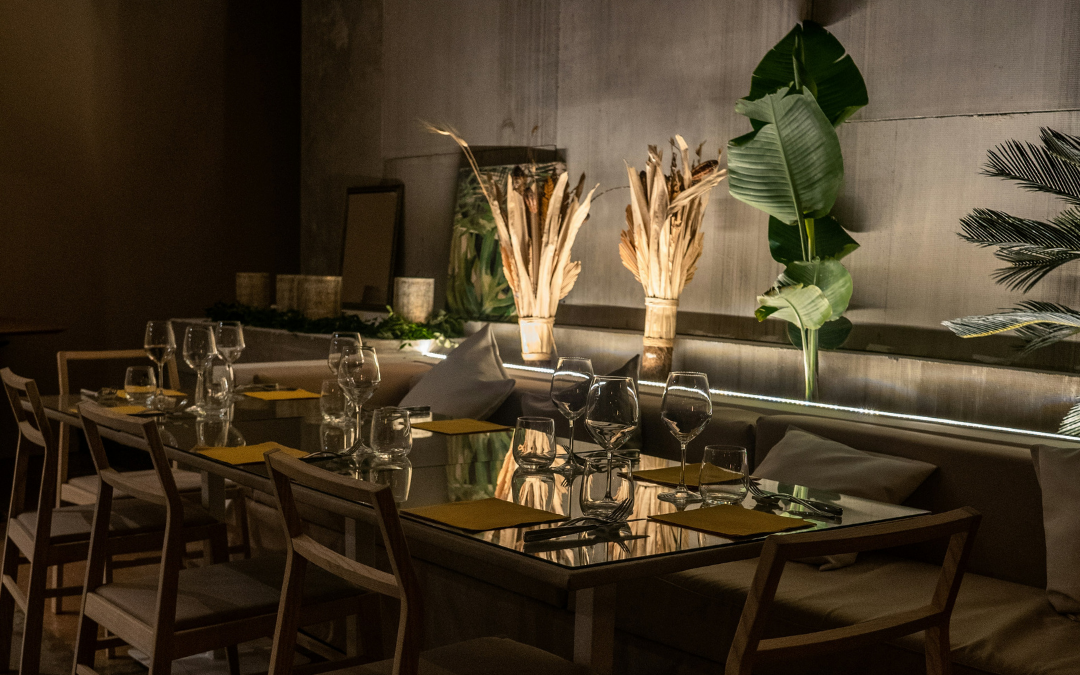
The restaurant interiors that create the most genuinely romantic and intimate atmosphere are almost always the ones that use candlelight as the primary lighting tool rather than a supplementary one. A room lit primarily by hundreds of candles, with architectural and accent lighting playing a supporting role, creates a quality of warmth and intimacy that no electric light source can fully replicate.
The flicker of candlelight creates a living quality in the room that static electric light does not. The warm colour temperature flatters every surface, every face, and every material in the room. The slight irregularity of the light creates shadows and highlights that make the space feel more dimensional and more atmospheric.
In residential dining rooms and living spaces, candles used deliberately and generously rather than as a decorative afterthought create a similar quality of atmosphere. The investment in quality candles and considered candleholders is one of the highest-return atmospheric decisions available in a home. A dining table lit primarily by candles, supplemented by a dimmed pendant rather than the other way around, creates an experience that guests consistently remember.
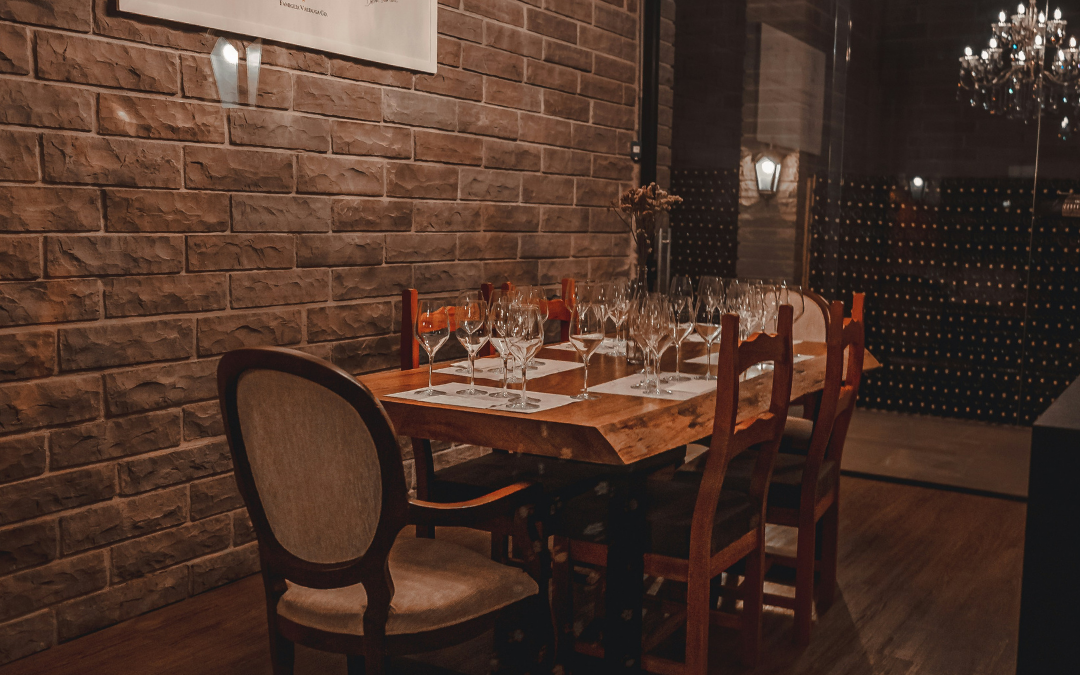
A generous timber bar in a restaurant or hospitality space is one of the most reliable room-defining features available. A bar of significant length, in a quality timber with visible grain and proper detailing, creates a social anchor around which the rest of the room organises itself. It provides a gathering point, a surface for display, and a design statement that marks the space as serious about its hospitality.
The timber species, the finish, and the profile of the bar edge all contribute to the overall character of the room. A raw, rough-sawn timber edge suits an industrial or rustic aesthetic. A refined, rounded edge in a polished hardwood suits a more contemporary or formal setting. The length of the bar matters as much as its material: a short bar serves drinks while a long bar anchors an entire room.
In a residential context, the home bar article published separately on this site explores how a dedicated bar area can function as a room-defining feature in a domestic setting, from a full built-in bar to a compact lacquered nook that delivers disproportionate impact for its size.
The three qualities that most consistently distinguish great restaurant interiors from merely competent ones are warmth, uniqueness, and flow. Warmth in the material palette, the lighting quality, and the sense that the space was designed for people rather than for photographs. Uniqueness in the specific identity of the space, the artwork, the material choices, the atmospheric tools, that make it unlike anywhere else. Flow in the spatial arrangement, the relationship between the bar, the dining area, and the circulation paths, that makes moving through the space feel natural and comfortable.
These three qualities are not exclusive to hospitality design. They are the qualities that distinguish any designed space that genuinely works for the people who occupy it. A home that is warm, that has a specific identity, and that flows well between its spaces, is a home that its occupants genuinely love living in.
If you would like help applying any of these principles to a residential or commercial space, get in touch. The thinking that makes a great restaurant interior great is the same thinking that makes any space genuinely worth being in.


