

A small living room does not have to feel like a compromise. With the right approach to furniture, colour, and layout, even a modest space can feel open, considered, and genuinely enjoyable to spend time in. The key is making deliberate choices rather than trying to squeeze everything in.
Here are nine decorating ideas that make a real difference in a small living room.
Every well-styled room has a focal point, and in a small living room this is especially important. A clear focal point gives the eye somewhere to land and stops the space from feeling scattered. Start by assessing what your room already has going for it. Great natural light, a beautiful fireplace, an interesting architectural feature, or a generous window are all assets worth playing up rather than competing with.
Once you have identified the focal point, arrange your furniture and accessories to draw attention toward it rather than away from it. Lighter colours, a statement light fitting, or a carefully placed mirror can all help to emphasise what is already working in the room.
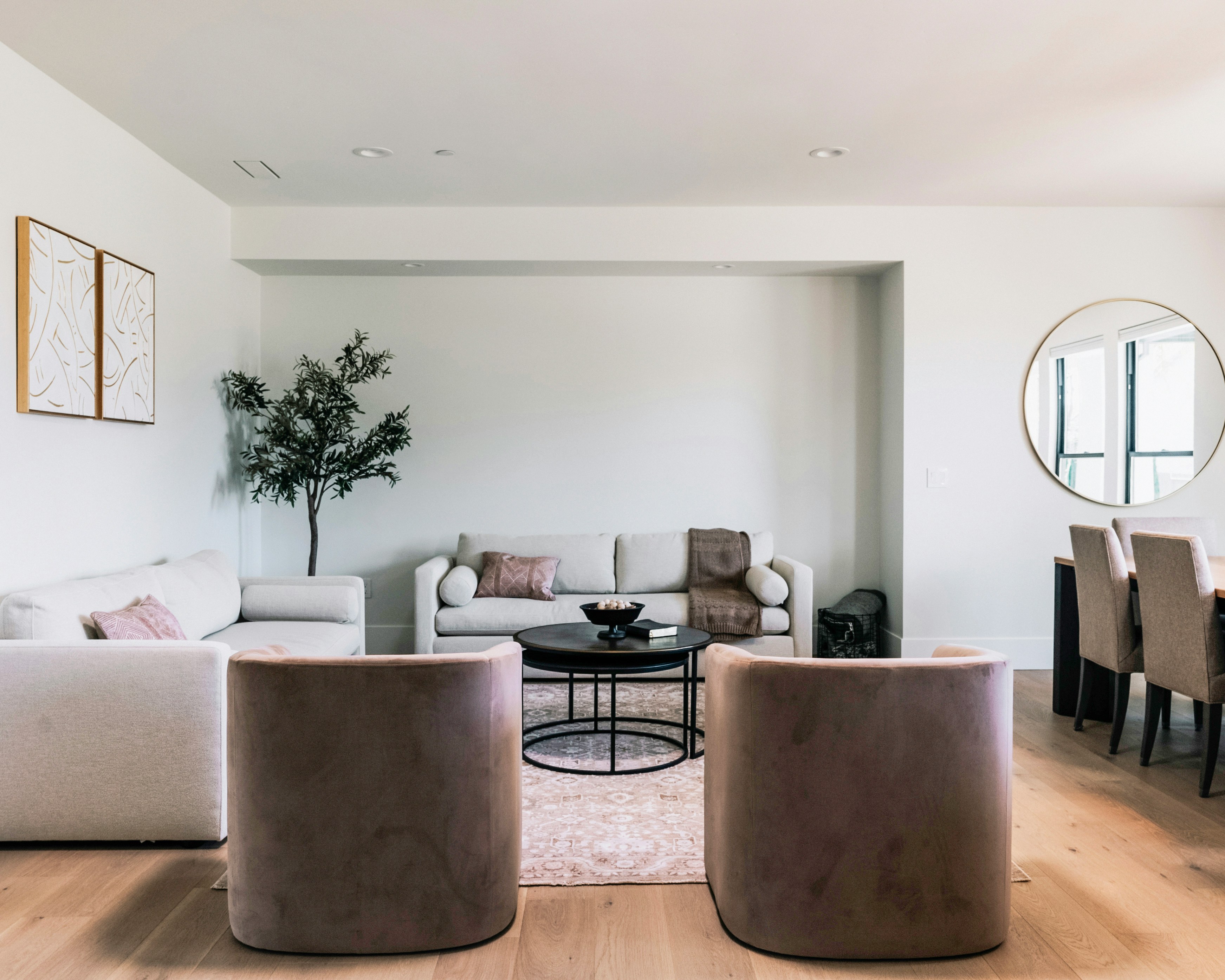
It might seem counterintuitive, but placing furniture away from the walls actually makes a small living room feel larger, not smaller. When sofas and chairs are pushed hard against every wall, the room reads as exactly the size it is. Pulling pieces slightly inward creates breathing room around the furniture and gives the impression of a more generous floor plan.
Choose low-profile sofas and chairs where possible. Lower furniture keeps sightlines clear and makes ceilings feel higher. If you need additional seating, stools are far more space-efficient than bulky armchairs and can be tucked away when not in use.

In a small living room, every piece of furniture needs to earn its place. Multi-use pieces are the most practical investment you can make. An ottoman with internal storage works as a coffee table, extra seating, and a place to stash blankets and books. A console table doubles as a desk. A storage stool tucks under a coffee table when not needed and pulls out when guests arrive.
The goal is to reduce the number of pieces in the room without reducing functionality. Fewer, more versatile pieces always feel more considered than a room crowded with single-purpose furniture.
Less furniture is almost always better in a small living room. Choose a sofa that is proportional to the size of the space rather than the largest one that will technically fit. If you need more seating, add one or two stools rather than a second armchair. GlobeWest carries a range of compact, well-designed seating options suited to smaller Australian living rooms.
Resist the urge to fill every corner. Empty space is not wasted space in a small room. It is what makes the room feel open rather than crowded.

Small rooms do not always need small things. A single oversized element, a large pendant light, a generous mirror, or a substantial piece of artwork, can create a sense of drama and confidence that makes a small room feel intentional rather than limited. The trick is to commit to one statement piece and keep everything else relatively quiet around it.
A well-chosen chandelier or sculptural pendant in a small living room creates contrast and draws the eye upward, which in turn makes the ceiling feel higher and the room feel larger.
The more floor space you can reclaim, the larger the room will feel. A wall-mounted television is almost always the best option in a small living room. Floating shelves above or beside the TV provide storage without adding visual weight at floor level. Drawer units and storage ottomans handle the overflow without cluttering surfaces.
The principle is simple: keep the floor as clear as possible and push storage upward. Even a modest amount of freed floor space makes a room feel noticeably more open.
Neutral tones remain one of the most reliable ways to make a small living room feel more expansive. Off-whites, warm beiges, and soft greiges reflect light well and create a sense of airiness that darker colours can struggle to achieve. Dulux has a strong range of warm neutrals that work particularly well in smaller rooms with limited natural light.
That said, dark and bold colours are not off limits in a small space. When used confidently and paired with good lighting and mirrors, a deep tone can make a small living room feel dramatic and intentional rather than cramped. The key is to commit fully rather than hedge with a single dark feature wall surrounded by clashing lighter tones.

If your living room has reasonable ceiling height, make the most of it by hanging curtains as high as possible, ideally close to the ceiling rather than just above the window frame. This draws the eye upward and makes the room feel taller. Keep the curtain fabric simple and use generous fullness so the window feels substantial even when the curtains are open.
Luxaflex offers a range of sheer and blockout options that suit smaller rooms well, filtering light beautifully without overwhelming the window or the wall.

Mirrors are one of the most effective tools in a small living room. A large mirror positioned opposite a window reflects natural light back into the room and creates the impression of a second opening, making the space feel brighter and more generous. The effect is immediate and significant.
Choose one large mirror rather than several small ones for maximum impact. A statement mirror with an interesting frame also functions as a piece of art, which means it is doing two jobs at once in a room where every element needs to pull its weight.
A few well-chosen accessories will always look better than a room full of competing objects. In a small living room, restraint is your friend. Choose pieces with meaning or visual interest, a quality candle, a sculptural vase, a small stack of books, and give them room to breathe rather than crowding them together.
If you prefer a more layered look, group like items together so they read as a curated collection rather than clutter. Metallic finishes in frames, vases, and decorative objects add a sense of quality and light without taking up visual space the way heavier or darker accessories can.
The best small living rooms are not ones where the size goes unnoticed. They are rooms where the design is so considered that the size simply does not matter. By being deliberate about focal points, furniture choices, colour, and accessories, you can create a living room that feels stylish, functional, and genuinely comfortable to spend time in.
If you would like help making your small living room work harder for you, get in touch. It is exactly the kind of project we enjoy.


