

A beach house is one of the most personal design projects available. It is usually a second home chosen for escape, which means it carries the freedom to be more expressive, more relaxed, and more personally meaningful than an everyday residence. The most beloved beach houses are the ones where that freedom has been used with genuine intention rather than simply defaulted to the safe coastal palette everyone expects.
This is the second of our articles on beach house and coastal home design. Where the first focused on starting with a hero piece, the bookended marble technique, and passive climate design, this one explores the bedroom as a retreat, the wraparound deck, the role of personal meaning in coastal design, and the materials that suit life closest to the water.
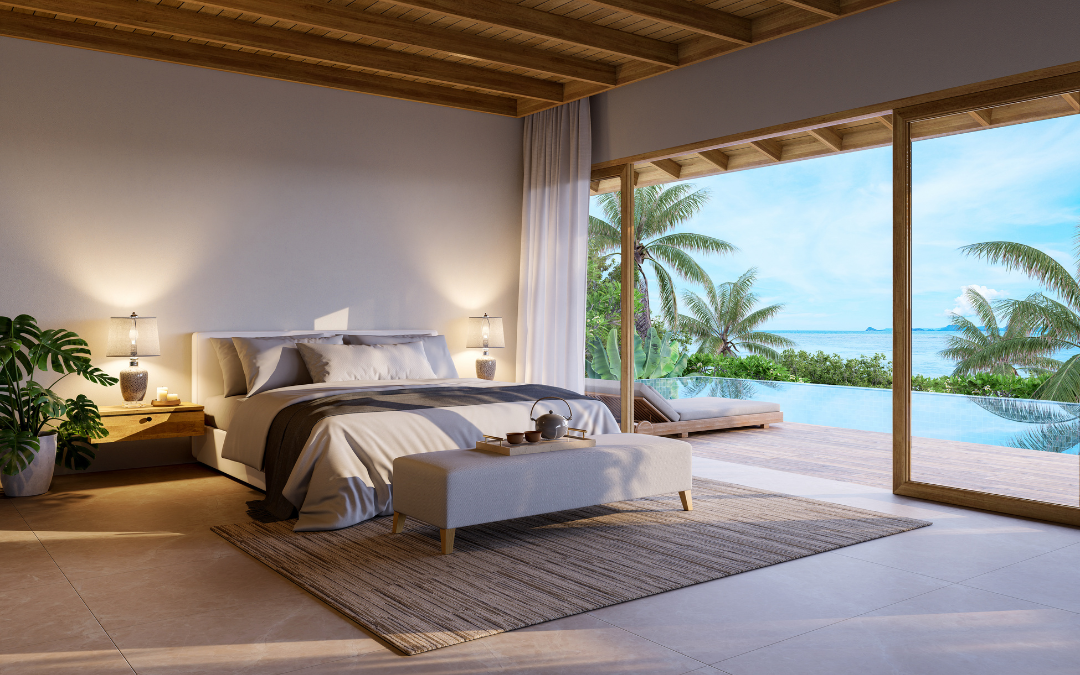
One of the most useful tools available to anyone beginning a significant home design project is the vision board: a collected set of images, materials, colours, and references that communicates the feeling you are trying to achieve before any design decisions are made. It is particularly valuable for a beach house, where the brief often begins as a feeling rather than a defined set of requirements.
A vision board does not need to be elaborate. A collection of saved images that share a mood. Fabric samples in tones that appeal. A photograph of a place that produces the feeling the home should replicate. These references give a designer something genuine to respond to and help the client articulate preferences they might not otherwise be able to express in words.
The process of creating a vision board also clarifies priorities. When you see your collected references together, patterns emerge. If every image contains natural timber, that tells you something. If every image is uncluttered and calm, that tells you something else. These patterns are the beginning of a design brief that is specific to you rather than generic.
In a beach house where the main living spaces are designed for gathering and entertaining, the bedroom deserves to be designed as its own world, more private, more intimate, and more deliberately luxurious than the spaces shared with guests and family.
This means making specific decisions for the bedroom that would not necessarily apply to the rest of the house. A bath positioned to take advantage of the best view, even if that means placing it in an unexpected location. A connection to the outdoors that is private rather than social, a small private balcony or a window positioned for morning light and a view of water or sky. Bedding in a quality and texture that makes the room feel genuinely indulgent. Lighting that is soft, warm, and adjustable to suit both early mornings and late evenings.
The bedroom in a beach house is the room where the restorative quality of the retreat is most concentrated. It deserves the same level of design attention as the kitchen or the living room, and in many cases more.
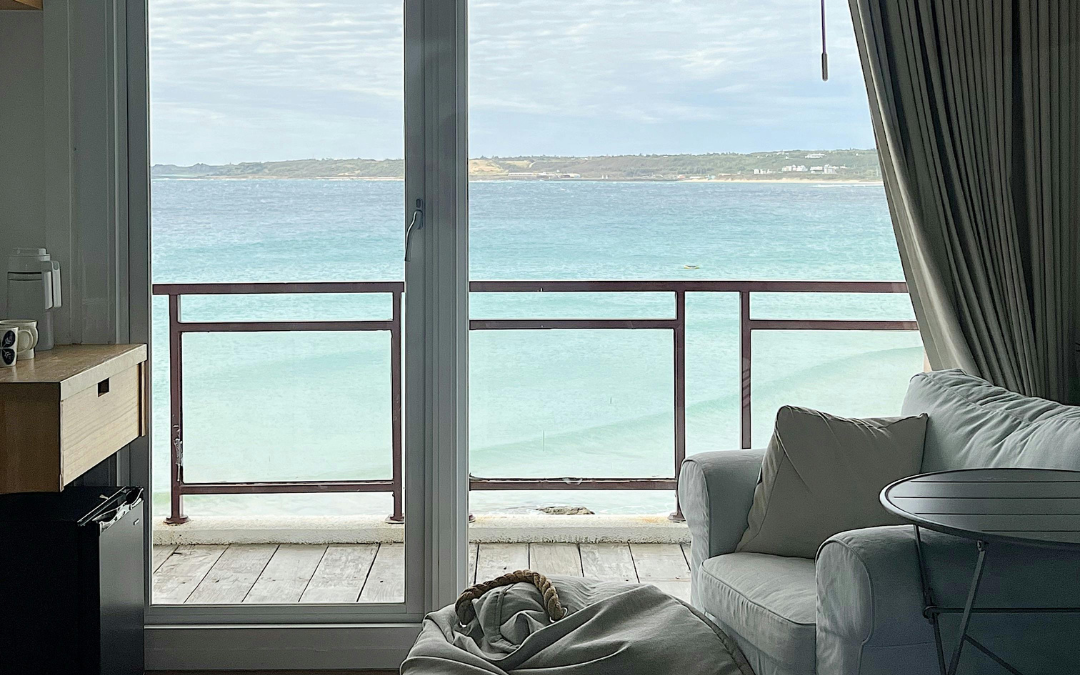
A wraparound deck is one of the most valuable structural features available in a freestanding beach house, and one of the most underutilised design opportunities. When a deck runs along multiple elevations of the house rather than simply off the back door, it creates a series of distinct outdoor experiences within the same continuous structure.
The east-facing section of a wraparound deck captures the morning light and suits a breakfast setting. The north-facing section suits afternoon lounging in the shade of the eaves. The west-facing section captures the sunset and suits the evening drinks and dining rituals that are among the greatest pleasures of beach house living. Each section can be furnished and styled for its specific orientation and use without requiring any additional structural work.
The material of a wraparound deck matters significantly in a coastal environment. Timber species that handle salt air, moisture, and UV exposure without rapid deterioration are worth specifying from the outset. Hardwoods like spotted gum, ironbark, and treated pine all perform well in coastal conditions and develop a beautiful silver-grey patina with weathering that suits the beach aesthetic naturally.
The beach houses that feel most genuinely special are almost always the ones where specific objects have been incorporated because they mean something to the people who live there, not because they fit the aesthetic brief. A piano that connects a room to a family member who played it. A piece of artwork acquired on a significant journey. A table that has been in the family for generations. A craft or handmade piece that connects the house to a local maker or artisan.
These objects do not need to match the design scheme perfectly. In fact, the most interesting ones often sit slightly outside the palette or the style of the room and are all the more compelling for it. A 19th century farmhouse table in a white, coastal interior creates exactly the kind of productive tension that makes a space feel collected over time rather than designed in a day.
The discipline when incorporating personally meaningful objects is to give each one enough space to be noticed and appreciated rather than surrounding it with competing pieces. One significant object with room to breathe is always more effective than a collection of meaningful pieces that cancel each other out. GlobeWest carries a range of furniture including dining tables in natural materials that suit the coastal aesthetic while providing the kind of quality and presence that a centrepiece piece deserves.
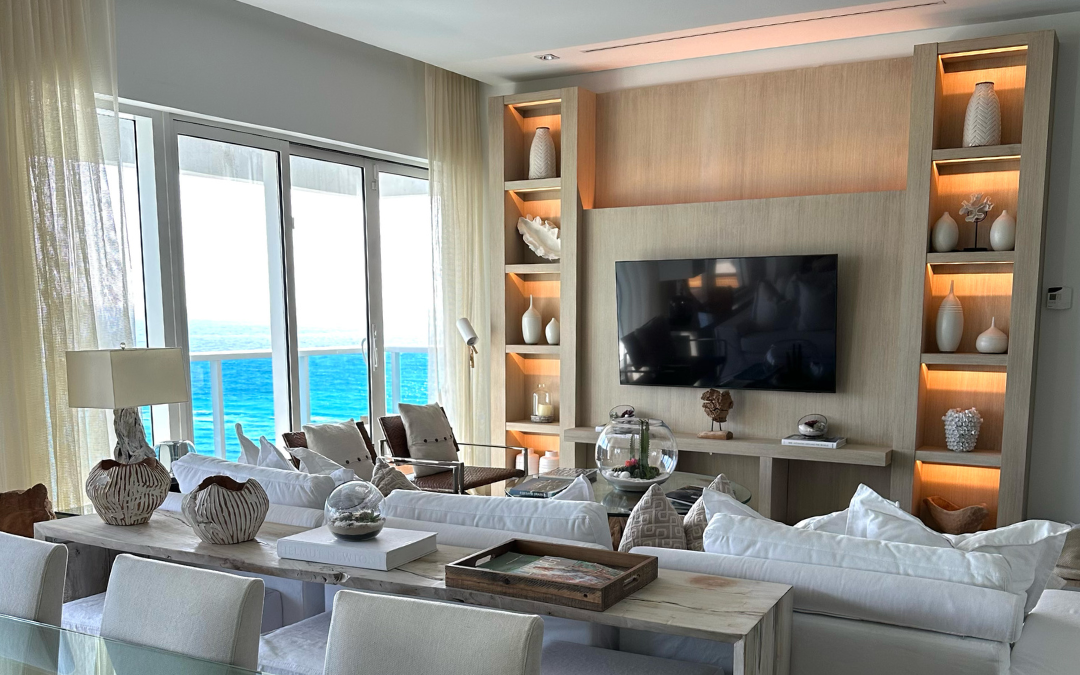
The coastal environment is hard on materials. Salt air, sand, humidity, UV exposure, and the constant movement between wet and dry all accelerate deterioration in ways that indoor environments do not. Choosing materials that age gracefully rather than simply deteriorating is one of the most important practical decisions in a beach house.
Natural timbers that develop character with exposure rather than simply wearing out. Stone and concrete that handle moisture without staining or cracking. Linen and cotton fabrics that wash and dry easily and improve in texture with repeated laundering. Rattan and cane that suit the coastal aesthetic and handle humidity better than upholstered alternatives in exposed positions.
The goal is a beach house that looks better after five years of use than it did when it was new, because the materials have developed the patina and character that only comes with genuine use in a specific environment. Armadillo produces natural fibre rugs that develop exactly this quality of character with use and suit coastal interiors particularly well.
The classic beach house exterior, whether in shingle, weatherboard, or timber cladding, has a specific visual character that the best coastal interiors draw into the house rather than treating the exterior as a separate design decision.
White or pale painted weatherboard on the exterior continued as white painted timber walls or panelling inside creates a seamless relationship between the building's skin and its interior that makes the whole house feel of a piece. The horizontal rhythm of weatherboard or shingle on the exterior can be echoed in the horizontal lines of timber wall panelling, louvred shutters, or cane furniture inside.
This continuity between exterior and interior is one of the qualities that makes the most successful beach houses feel so naturally coherent. The house reads as a single designed object from outside and in, rather than two separate design exercises that happen to share a shell. Dulux has a strong range of exterior and interior whites and off-whites that can be used consistently across both applications to achieve this continuity.
A beach house is often chosen and used as a place of genuine restoration, which means the sensory and atmospheric qualities of the space are at least as important as its visual ones. The sound of the ocean through an open window. The smell of salt air. The quality of light at different times of day. The feeling of sand underfoot on a timber deck. These are the experiences that make a beach house feel like a genuine escape rather than simply a well-decorated room.
Design decisions that support these sensory qualities are worth prioritising. Windows positioned to catch the sound of the ocean as well as the view of it. Cross-ventilation that draws the salt air through the house rather than relying on air conditioning. A covered outdoor shower that allows the transition from beach to house to happen comfortably and gradually. Flooring that feels good underfoot whether you arrive with sandy feet or clean ones.
A beach house that has been designed with genuine attention to how it feels to be in it, as well as how it looks, is the kind of place that restores people rather than simply impresses them.
The most beloved beach houses are not the largest or the most expensively furnished. They are the ones where specific, personal decisions were made about how the space should feel, what objects should live in it, and how the materials should age, and those decisions were followed through with genuine commitment.
If you are planning or renovating a beach house or coastal property and would like help thinking through the design decisions, get in touch. It is some of our most enjoyable work.


