

Urban living has a lot going for it. Being close to work, having cafes and restaurants nearby, and cutting down on commute time are real advantages that more Australians are choosing to prioritise. But smaller living spaces come with their own challenges, and making a compact apartment feel comfortable, functional, and genuinely enjoyable to live in takes a considered approach.
The good news is that you do not need to knock down walls or spend a fortune to make a small space feel bigger. These four strategies make a real and immediate difference.
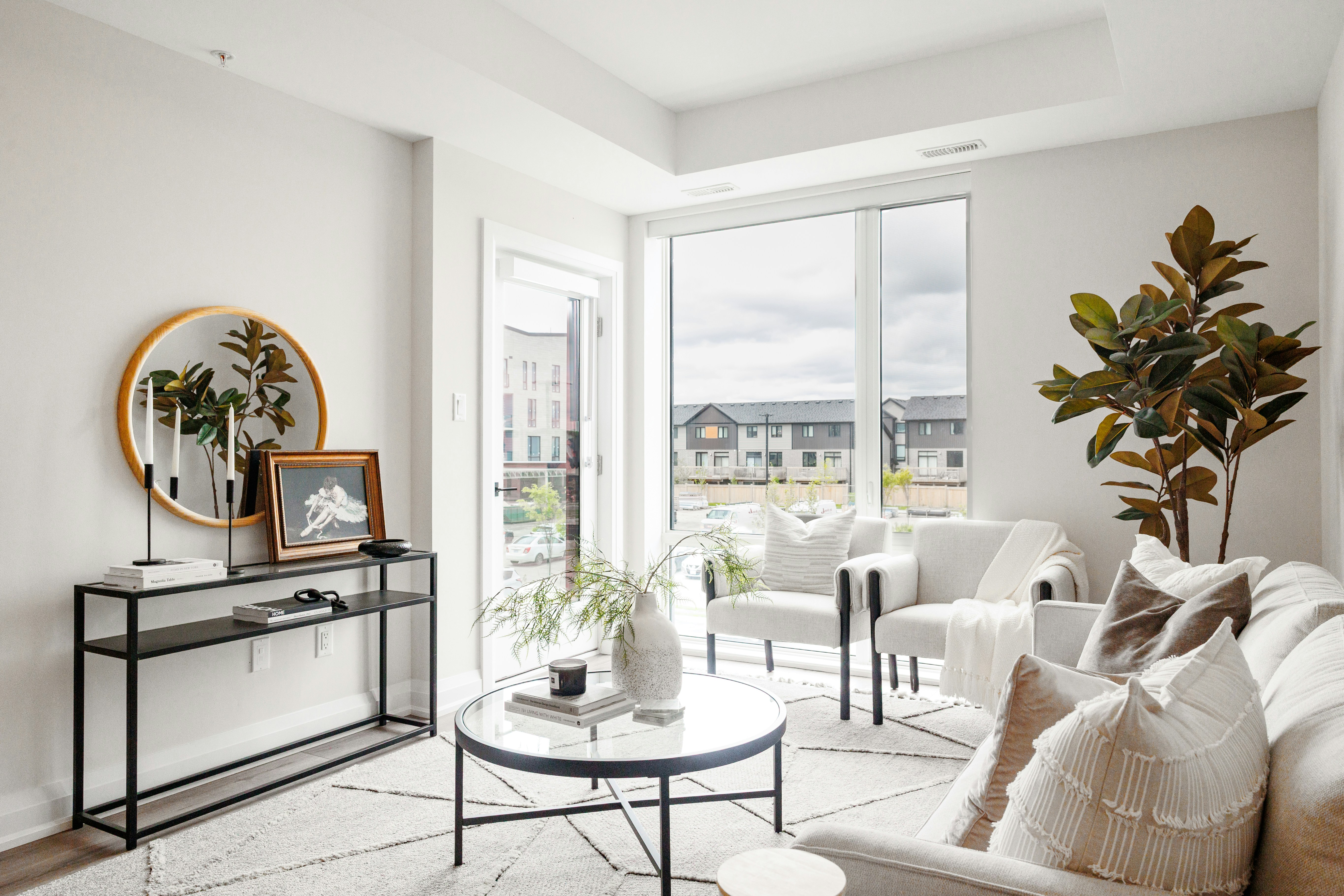
In a smaller home, every piece of furniture needs to earn its place. Multifunctional pieces are the starting point: a coffee table with internal storage, an ottoman that opens up to hold blankets and books, a bed frame with drawers underneath, or a dining table that folds down when it is not in use.
Beyond choosing the right pieces, the habit of staying organised matters just as much. Clutter is the enemy of a small space. When everything has a place and surfaces are kept clear, even a modest apartment feels noticeably more open and calm. Investing in good storage solutions across every room, from the kitchen pantry to the wardrobe, is one of the most effective things you can do for both liveability and appearance.
Lighting has an outsized effect on how spacious a room feels, and in a smaller apartment it deserves careful thought. A single overhead light fitting tends to flatten a space and draw attention to its boundaries. A layered approach works far better.
Combine ambient lighting directed toward the ceiling to make the room feel taller, task lighting for work areas and reading nooks, and accent lighting to add depth and visual interest. Wall-mounted fittings and pendant lights also free up floor and surface space that a table lamp would otherwise occupy. And wherever possible, maximise natural light. Keep window treatments simple and light-filtering rather than heavy and room-darkening. Even a small window can do a lot of work when it is not being blocked.
.png)
Mirrors are one of the oldest tricks in the interior design playbook, and they work. A well-placed mirror can make a room feel significantly larger, but placement matters. The key is to position a mirror so that it reflects something with depth, a window, a view into another room, or a piece of artwork, rather than a blank wall directly opposite. When a mirror reflects depth, it genuinely extends the visual boundary of a space. When it reflects nothing interesting, it just looks like a mirror on a wall.
A large single mirror tends to be more effective than several small ones. Consider a full-length mirror leaning against a wall, a wide mirror above a console, or a mirrored wardrobe panel that runs the full height of the room.
If your apartment has a balcony or courtyard, do not treat it as a separate zone. Extending the same flooring material from inside to outside, where possible, creates a seamless visual flow that makes both spaces feel larger. When the eye travels through a room and out onto a balcony without interruption, the overall sense of space expands considerably.
Even without matching flooring, you can strengthen the indoor-outdoor connection through consistent styling. A small outdoor dining setting in tones that complement your interior, a potted plant that bridges the two spaces, or a simple outdoor rug that echoes your interior palette all help to make the transition feel deliberate rather than abrupt. Bunnings has a good range of compact outdoor furniture suited to balcony-sized spaces if you are starting from scratch.

A smaller apartment does not mean settling for less. With the right furniture choices, a considered lighting plan, a few well-placed mirrors, and a connection to your outdoor space, you can create a home that feels open, functional, and genuinely enjoyable to live in every day.
If you would like help making the most of your space, get in touch. We work with apartments and smaller homes regularly and would love to help you get more out of yours.


