

The dining room is one of the most underrated rooms in the home. It is where the best conversations happen, where celebrations take place, and where people tend to linger long after the meal is finished. Yet it is also one of the rooms most people approach with the least imagination, defaulting to a matching table and chair set and calling it done.
A well-designed dining space does not need to be large or expensive to feel genuinely special. Whether yours is a separate formal room or a corner of an open plan living area, these five ideas will help you create somewhere people genuinely want to gather.
Every well-designed room has a focal point, and in a dining space this is especially important. Without one, the room lacks a sense of intention and can feel like a functional afterthought rather than a considered space.
The most natural focal point in a dining room is a statement pendant or chandelier positioned directly above the table. This anchors the dining zone visually, defines the space within a larger open plan layout, and immediately signals that this is a room worth spending time in. A dramatic light fitting does not need to be large to have impact. Even a modest pendant in an interesting form or finish draws the eye and gives the room its character.
If your ceiling height allows, hang the fitting lower than you might expect. A pendant positioned around 70 to 80 centimetres above the table surface creates an intimate pool of light that makes the dining experience feel more considered and more enclosed, in the best possible sense.
Dining rooms have a tendency to be decorated in isolation, resulting in a space that feels disconnected from the rooms around it. In an open plan home this is particularly obvious. The most cohesive approach is to treat the dining area as a visual extension of the kitchen and living spaces rather than a separate design exercise.
This does not mean everything needs to match. It means choosing a colour palette that complements what is already in the adjoining spaces. If your kitchen has warm timber tones and your living room leans toward neutral with green accents, carry one or both of those threads into the dining area through chair upholstery, a rug, or a feature wall tone.
Dulux colour consultants can help you identify a dining room palette that sits in harmony with the rest of your home if you are unsure where to start. A deep, rich tone on the dining room walls, a moody green, a warm terracotta, or a classic charcoal, can give the space a sense of occasion that lighter tones rarely achieve.
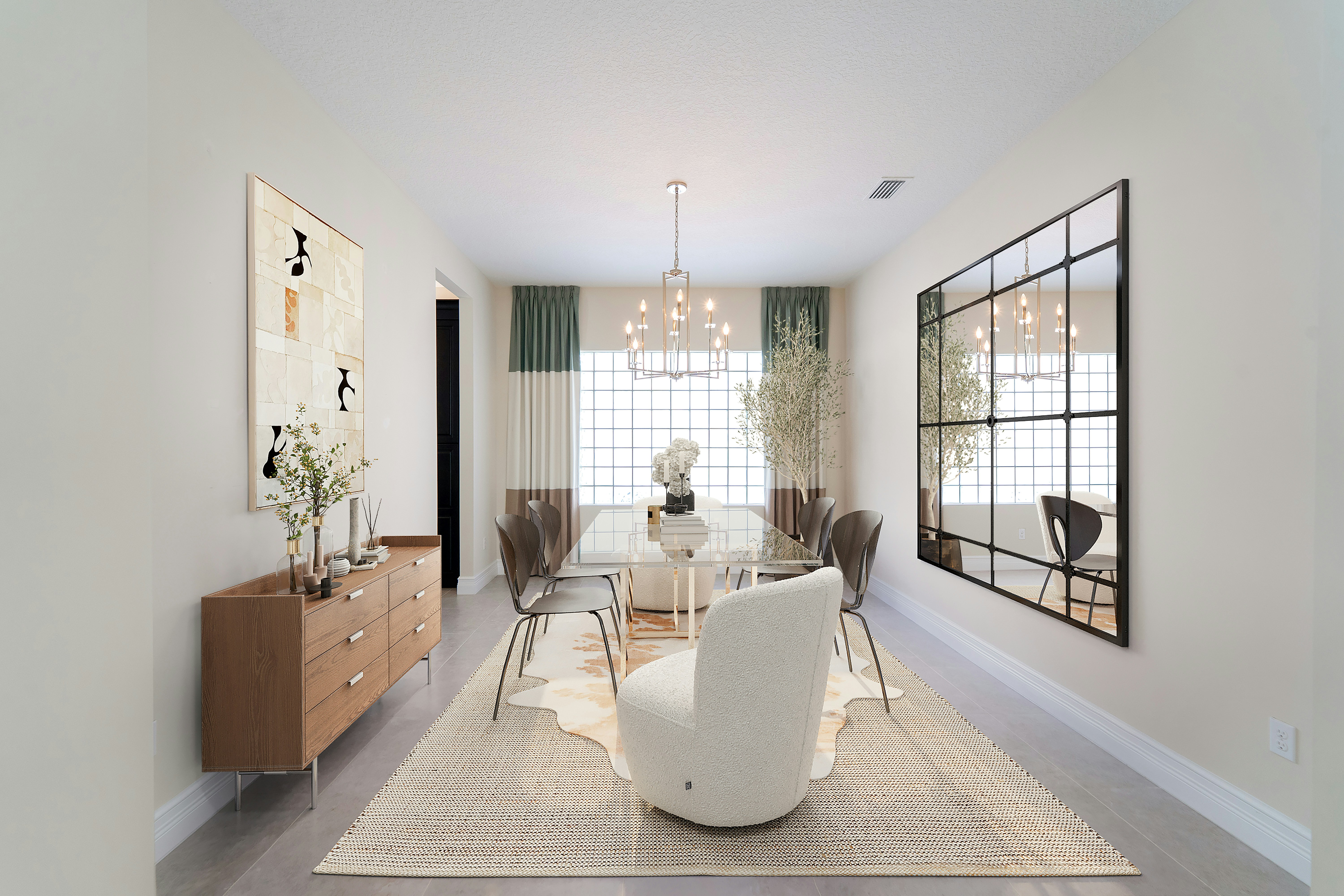
A well-placed mirror in a dining room does two things simultaneously: it reflects light back into the space, making it feel brighter and more generous, and it adds a layer of visual interest that a plain wall cannot provide.
Position a large mirror on the wall opposite a window to maximise the light-reflecting effect during the day. In the evening, a mirror beside or behind a cluster of candles creates a warm, flattering glow that makes the room feel genuinely atmospheric. Choose a frame that complements the overall style of the room. An ornate gilded frame suits a more classic or French provincial dining aesthetic. A simple timber or black metal frame sits better in a contemporary setting.
GlobeWest carries a range of statement mirrors in finishes suited to dining rooms, from oversized leaning mirrors to wall-mounted options in carved and metallic frames.
Lighting in a dining room needs to work across two very different contexts: the functional daytime meal and the atmospheric evening gathering. A single overhead fitting rarely handles both well on its own.
Fixtures that direct light downward onto the table create an intimate, focused effect that suits evening dining beautifully. Fixtures that cast light upward wash the ceiling and walls in a softer glow that makes the whole room feel warmer. The most effective dining room lighting combines both, with a statement pendant above the table supplemented by wall sconces or a sideboard lamp that adds ambient warmth at a lower level.
A dimmer switch is essential. The ability to reduce the overhead light as the evening progresses and rely more on the softer ambient sources is what transforms a dining room from a place to eat into a place to stay. Warm-toned bulbs throughout will enhance the colours in the room and make everyone at the table look their best. Beacon Lighting has a strong range of dining room pendants and dimmable fittings suited to Australian homes.

The dining table is the most important piece of furniture in the room and deserves careful thought. The most common mistake is choosing a table that is too large for the space, which makes movement around the room awkward and gives the whole area a cramped, uncomfortable feel.
As a general guide, allow at least one metre of clearance on all sides of the table for chairs to be pulled out and people to move past comfortably. In a smaller dining area, a table that seats six comfortably is almost always a better choice than one that can technically seat eight but leaves the room feeling overwhelmed.
Shape matters as much as size. A round or oval table works well in a compact room because it has no corners to navigate and allows for easier conversation across the whole table. A rectangular table suits a longer, narrower dining room and can feel more formal. GlobeWest carries dining tables across a range of sizes, shapes, and materials, from solid timber to marble-topped options, that suit everything from a casual family dining area to a more considered formal space.
The difference between a dining room that looks styled and one that looks furnished often comes down to the accessories. A beautiful table setting, a cluster of candles in varying heights, a simple arrangement of flowers or branches in a sculptural vase, and a quality tablecloth or runner in a texture that complements the chairs all contribute to a room that feels genuinely cared for.
Keep accessories edited rather than abundant. A dining table does not need to be decorated at all times, but when it is dressed, every element should feel intentional. One large vase with a simple seasonal arrangement is almost always more effective than several small objects competing for attention.
The best dining rooms are not the grandest or the most expensive. They are the ones where the light is right, the table fits the space, and the whole room makes you want to stay a little longer. By giving the space a clear focal point, connecting it to the rest of your home through colour, and getting the lighting and furniture scale right, you can create a dining room that genuinely rewards the people who gather in it.
If you would like help styling or refreshing your dining space, get in touch. We would love to help you create somewhere worth lingering.


